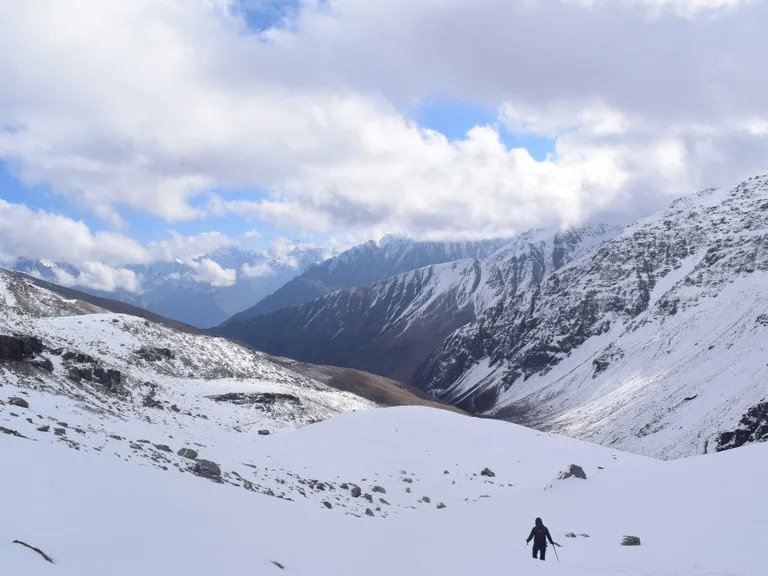
Rupin Pass Trek is likely at the top of your list. Located at an altitude of approximately 15,250 feet, this trek is a classic crossover that takes you from the apple orchards of Uttarakhand to the stunning landscapes of the Sangla Valley in Himachal Pradesh.
However, the mountains are as unpredictable as they are beautiful. To truly enjoy this “complete” trek, you need to time it perfectly. In this guide, we will break down the Rupin Pass Trek best time to help you plan an expedition that matches your adventure style.
Why Timing Matters for Rupin Pass
Unlike some lower-altitude treks that can be done throughout the year, Rupin Pass is seasonal. Because it involves crossing a high mountain pass, the trail is heavily influenced by snow and monsoon rains. Choosing the right month determines whether you will be walking on massive snow bridges or through golden, flower-filled meadows.
The trek is generally open during two specific windows:
The Summer/Pre-Monsoon Window: May to June.
The Autumn/Post-Monsoon Window: Mid-September to October.
For many trekkers, the Rupin Pass Trek best time is during the early summer months. This is when the Himalayas are waking up after a long winter sleep.
In May and early June, you will find a significant amount of snow at higher altitudes. One of the most famous highlights of this trek is the snow bridges—natural arches of ice formed over the Rupin River. Walking across these is a surreal experience that feels like something out of a movie.
As the summer sun starts melting the snow, the legendary three-stage Rupin Waterfall comes alive. The volume of water is at its peak, and the roar of the falls echoing through the U-shaped glacial valley is something you will never forget.
If you love the thrill of snow trekking and want to see the waterfalls in their full glory, this is your window. Be prepared for colder nights and some physical effort while navigating snowy patches near the pass.
If you prefer stable weather and crisp, panoramic views, then the autumn window might be the Rupin Pass Trek best time for you.
Once the monsoon rains wash away the dust and haze, the air becomes incredibly clear. This is the best time for photography. You will get sharp, unobstructed views of the Kinner Kailash range and the surrounding peaks.
During these months, the lush green meadows of summer begin to turn into a beautiful golden-brown. The trails are drier and easier to walk on compared to the slippery snow of June. It is a more “stable” version of the trek, making it a favorite for those who want to focus on the landscape without the technicality of deep snow.
A high-altitude trek like Rupin Pass requires meticulous planning, from safety equipment like micro-spikes to nutritious meals that keep your energy up. While some people attempt to go solo, most trekkers prefer the safety and expertise of a professional team.
For my upcoming expedition, I have planned my journey with TrekYaari, a tour and travel agency known for its experienced guides and focus on safety. Having a reliable team allows you to focus entirely on the beauty of the hanging village of Jakha and the steep climb of the Rupin Gully without worrying about the logistics of tents or mountain permits.










Bids